
Cooking every day gets tedious not because the food is bad but because of the friction. The time it takes to find things. The cleanup that seems to multiply. The small inefficiencies that individually take 30 seconds but collectively turn a 20-minute meal into a 45-minute ordeal.
Most of these frictions are fixable.
None of the hacks below require special equipment or a kitchen renovation. They are techniques and habits that experienced home cooks pick up over years. The kind of thing you learn by accident in someone else’s kitchen and then wonder how you cooked without knowing it.
Prep Hacks: Cut the Boring Work Down
1. Set Up a Scrap Bowl Before You Start
Before touching any ingredient, put a large bowl at the edge of your cutting board. Every piece of packaging, every vegetable end, every peel goes directly into it as you work.
One trip to the bin when you are done instead of six trips mid-prep. Your cutting board and counter stay clear. Your prep area never reaches that chaotic midpoint where you are cutting around rubbish because there is nowhere to put things.
This is the single fastest way to make cooking prep feel less messy.
2. Mise en Place: Prep Everything Before the Pan Gets Hot
Mise en place is the French culinary term for having everything prepared before cooking starts: vegetables chopped, spices measured, sauces ready, proteins seasoned. Professional kitchens run on this principle.
At home, it means reading the recipe once fully, prepping every ingredient before turning on any heat, and having everything in small bowls or piles ready to go.
The payoff: you stop burning things because you had to stop mid-cook to chop an onion. You stop the panicked search for the garlic while the oil is smoking. Cooking with everything already prepped is genuinely calmer and faster than cooking and prepping simultaneously.
3. Chop Double and Refrigerate
When you chop onions, garlic, peppers, carrots, or any vegetable you use regularly, chop twice as much as you need and refrigerate the rest in a sealed container.
Onions keep 7 to 10 days in the fridge once chopped. Garlic keeps 3 to 5 days. Most hard vegetables keep 5 to 7 days. The next time that recipe comes around, half the prep is already done.
This is not full meal prep. It is a 60-second extension of prep you are already doing that saves the same 10 minutes two days from now.
4. Use a Bench Scraper to Clear the Board
A bench scraper (a flat rectangle of stainless steel with a handle) costs almost nothing and moves chopped ingredients from board to pan or bowl in one motion without losing anything down the counter edge.
If you do not have one, use the flat side of your knife carefully. The technique is the same: lay it flat against the pile and sweep. Faster and cleaner than the usual method of piling with your hands.
Cooking Hacks: Work the Stove Smarter
5. Salt Your Pasta Water More Than You Think
Pasta water should taste like mild seawater. Most people use far less salt than this and then wonder why pasta dishes taste flat even with a well-made sauce.
Salted cooking water seasons pasta from the inside as it cooks. No amount of salt added at the end of cooking fully compensates for underseasoned pasta itself.
6. Save a Cup of Pasta Water Before You Drain
Before draining pasta, scoop out a mug of the cooking water. The starchy, salted water is one of the best sauce ingredients you are currently pouring down the drain.
Added to most pasta sauces (a few tablespoons at a time), it binds the sauce to the pasta, adjusts the consistency without watering it down, and adds depth to the flavor. This is the technique behind why restaurant pasta tastes different from home pasta with the same sauce.
7. Let Meat Rest Before Cutting
When meat comes out of the pan, oven, or grill, wait 5 minutes before cutting it. This goes for chicken breasts, steak, pork chops, and anything else.
During cooking, the muscle fibers tighten and push juices toward the centre. Cutting immediately releases those juices onto the board. Waiting 5 minutes lets the fibers relax and the juice redistribute through the meat. You get a noticeably juicier result from the exact same cook.
8. Bloom Your Spices in Oil First
Whole or ground spices added directly to a dish deliver a fraction of the flavor of spices that have been briefly heated in oil first.
Blooming means adding spices to warm oil in the pan for 30 to 60 seconds before adding any other ingredients. The heat activates and releases the volatile compounds that give spices their aroma and depth. Curries, stews, and rice dishes taste dramatically better this way with no additional ingredients or time.
9. Use a Lid to Speed Up Boiling
Covering a pot with a lid traps heat and brings water to a boil significantly faster than leaving it uncovered. This is an obvious one but many people boil water without a lid out of habit.
For rice, adding a lid once the water boils and reducing the heat is also how you get evenly cooked rice without it going mushy on the bottom or undercooked on top.
Cleanup Hacks: Finish Faster After Eating
10. Clean As You Cook
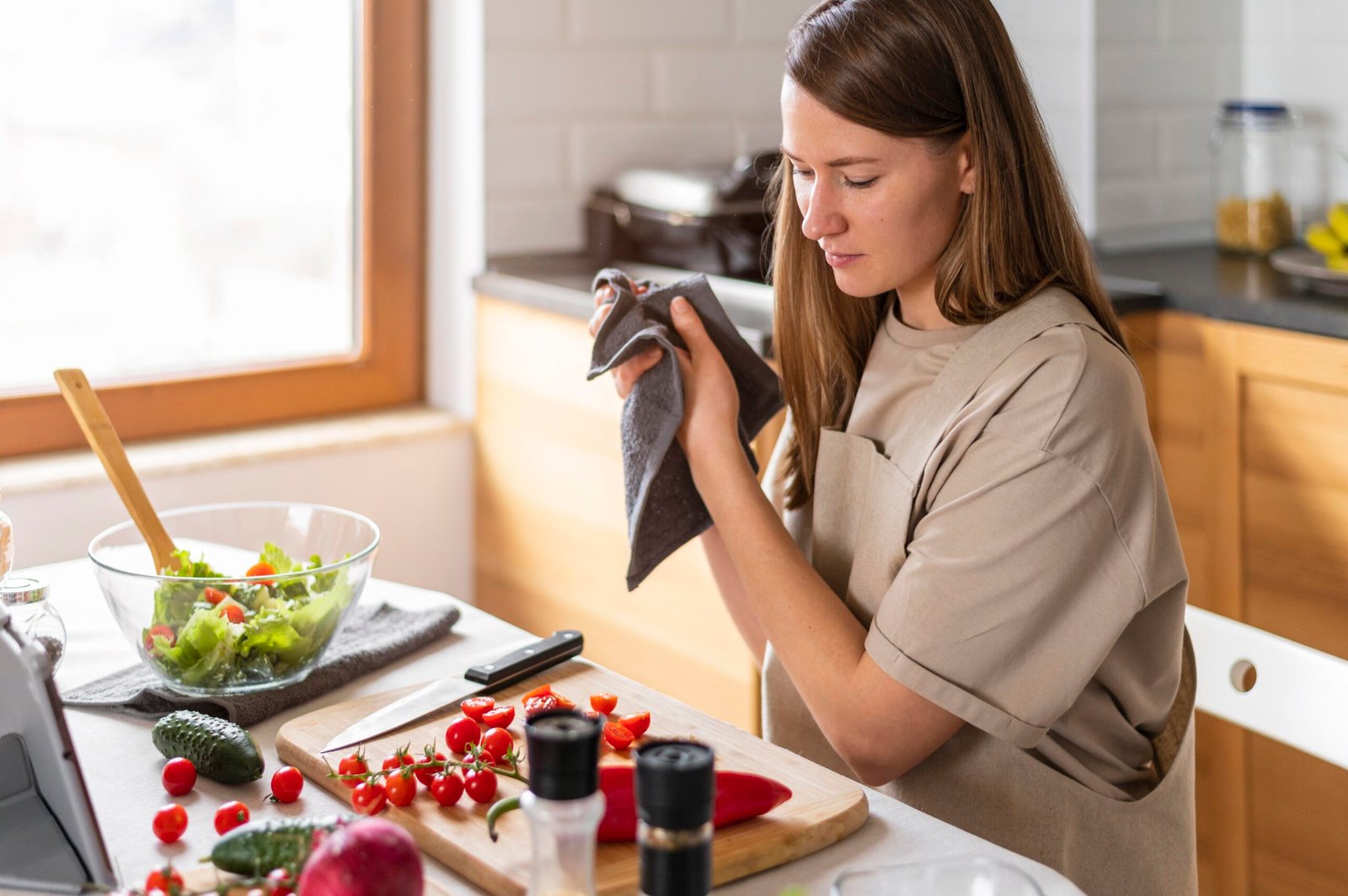
While things are simmering, roasting, or waiting, wash the tools and boards you have already finished using. By the time the meal is ready, most of the kitchen is already clean.
This habit converts a post-meal cleanup session into a minor tidy. It is the single most effective kitchen habit for reducing the amount of work after eating.
The standard objection is that it feels like working constantly. The reality is that most cooking involves significant waiting time (things reducing, baking, resting) and that time is genuinely idle. The cleaning takes 3 minutes spread across 20 minutes of cooking rather than 15 minutes in one go at the end.
11. Line Baking Trays With Parchment or Foil
Lining a baking tray before roasting vegetables, baking anything, or cooking sticky proteins takes 10 seconds and means the tray goes from oven to recycling bin (foil) or compost bin (parchment) rather than the sink for soaking.
Soaking a baked-on roasting tray takes 20 minutes and scrubbing it takes 5 more. The liner costs almost nothing per use and eliminates this entirely.
12. Soak the Pan Immediately
When a pan is finished being used and cannot be washed immediately, fill it with warm soapy water and leave it. Food that soaks for 10 minutes washes off with a sponge. Food that dries for an hour requires scrubbing.
The soaking pan is not a failure of cleanliness. It is a deliberate step that converts difficult scrubbing into easy washing.
Storage Hacks: Use Ingredients Before They Go Bad
13. Freeze Overripe Bananas Immediately
The window between “perfect for eating” and “too soft to enjoy” on bananas is narrow. When bananas hit that overripe point, peel them, break them in half, and freeze them in a bag.
Frozen bananas blend into the smoothest smoothies, make one-ingredient banana ice cream (blend frozen banana alone in a food processor for 2 minutes), and are ready for banana bread whenever the mood strikes. Nothing gets thrown away.
14. Store Fresh Herbs in Water Like Flowers
Fresh herbs stored flat in the refrigerator wilt in 3 to 4 days. The same herbs stored upright in a glass with an inch of water, loosely covered with a plastic bag, stay fresh for 1 to 2 weeks.
Treat them like a small bunch of flowers on your counter (or in the fridge door for delicate herbs like cilantro and parsley). Most people double or triple the usable life of their fresh herbs with this one change.
15. The FIFO Rule for the Refrigerator
FIFO means First In, First Out. When you put new groceries in the refrigerator, move the older items to the front and put the new items behind them. You always reach for the oldest item first.
This one habit is responsible for most of the food waste reduction in households that manage to significantly cut waste. New items hiding behind old items until the old items expire is the main mechanism of refrigerator food waste.
It takes 30 seconds at grocery time and saves the quiet frustration of finding something expired at the back of the fridge every few weeks.
For the grocery shopping side of this, the guide on how to save money on groceries every month covers meal planning and the freezer habits that reduce waste further.
Frequently Asked Questions
Q: What is the one kitchen hack that makes the biggest difference for daily cooking?
Mise en place, by a significant margin. Prepping all ingredients before any heat goes on changes how calm and controlled cooking feels. Most cooking mistakes and stress happen when people are prepping and cooking at the same time. The 5 extra minutes of prep before turning on the stove saves more time and frustration than any other single technique.
Q: How do I stop vegetables from going bad before I use them?
The fridge FIFO habit handles most of this. Beyond that: store vegetables that release ethylene gas (bananas, apples, avocados) away from vegetables that are sensitive to it (leafy greens, carrots, cucumber). Store herbs in water. Keep the refrigerator temperature consistent, not too warm in the back.
Q: What kitchen tools are actually worth buying for everyday cooking?
A sharp chef’s knife, a bench scraper, a good cutting board large enough to work comfortably on, and a cast iron or good quality non-stick pan cover 90 percent of daily cooking. Most other gadgets solve problems that most home cooks rarely encounter.
Q: How do I make cooking feel less like a chore?
Most of the tedium of daily cooking comes from friction, not the cooking itself. Applying mise en place, keeping the kitchen tidy before you start, and cleaning as you go removes most of the friction. Music, podcasts, or an audiobook during prep also changes the experience significantly.
Q: How long in advance can I prep ingredients?
Onions, garlic, and most root vegetables keep 5 to 7 days chopped in the fridge. Leafy greens keep 2 to 3 days once washed and dried. Marinated proteins keep 1 to 2 days. Cooked grains keep 4 to 5 days. Knowing these windows helps you prep intelligently rather than discovering things have turned.
Q: What is the best way to reduce kitchen cleaning time overall?
Clean as you cook. This single habit reduces post-meal cleanup from 20 to 30 minutes to 5 to 10 minutes for most home cooks. Combine it with lined baking trays and a scrap bowl during prep and the kitchen rarely reaches the state where cleaning feels like a project.