
The bathroom is the room most guests see and the room most people clean least consistently.
Not because it is the hardest room to clean. A full bathroom clean takes 20 to 25 minutes when you start from a neglected state. It takes 10 minutes when you do it weekly. It takes 2 minutes daily if you maintain it in between.
The problem most people have is that they only clean the bathroom when it genuinely needs it, which means they always start from that neglected state. The cycle of avoiding it until it is bad, then spending 30 minutes scrubbing, repeats every few weeks.
This post breaks that cycle. It covers a 10-minute weekly clean and a 2-minute daily habit that together mean the bathroom is always in decent shape without ever requiring a major effort.
The Right Order Makes a Huge Difference
Before covering the routine itself, the order of cleaning matters more in the bathroom than almost any other room.
Always clean top to bottom. Dust and product residue from shelves and the mirror falls downward. If you clean the floor first and then wipe the counter, particles from the counter land on the clean floor. Always start high and finish with the floor.
Always clean from least dirty to most dirty. Sink before toilet. Counter before toilet. The toilet is cleaned last and the tools used on it do not touch other surfaces.
This order prevents cross-contamination and stops you from re-cleaning areas you just finished.
The 10-Minute Weekly Bathroom Clean
This assumes a standard bathroom with a toilet, sink, shower or bath, mirror, and floor. Timer starts when you walk in with your supplies.
What you need ready before you start:
- An all-purpose bathroom cleaner
- A disinfectant spray (or the same cleaner if it disinfects)
- A few cleaning cloths or paper towels
- A toilet brush
- A mop or reusable floor cloth
Having everything in one caddy under the sink means no trips to another room mid-clean. The travel time kills the 10-minute target faster than the cleaning itself.
Minutes 0 to 1: Apply Cleaner and Let It Sit
Spray the toilet bowl with cleaner and leave it. Spray the sink and counter. Spray the inside of the shower if you are cleaning it this week.
You are not wiping anything yet. You are letting the cleaner do the dissolving work while you move to other things. This is the step most people skip and it is the reason scrubbing takes longer than it needs to.
Minutes 1 to 3: Mirror and Shelves
Wipe the mirror first while surfaces below are still soaking. A dry microfibre cloth or a glass cleaner spray and cloth both work. Single horizontal wipes from top to bottom, slightly overlapping each pass.
Clear the shelves of any items, wipe the shelf surface, put items back. You are removing dust, residue, and any product drips.
Minutes 3 to 6: Sink and Counter
The cleaner has been sitting for 3 minutes. Wipe the counter now. Wipe around the taps and the basin. Rinse with a damp cloth. Dry with a second cloth to prevent water spots.
The tap area is where the most product buildup and water staining happens. A slightly firm wipe with a damp cloth removes most of it. For stubborn limescale around taps, a small amount of white vinegar on a cloth left for two minutes dissolves it without any scrubbing.
Minutes 6 to 8: Toilet
Wipe the outside of the toilet in this order: tank, then the top of the lid, then the seat (top and underside), then the bowl exterior, then the base where it meets the floor.
Use a fresh cloth or disposable wipe for the toilet. Do not use the same cloth you used on the sink.
Now scrub the inside of the bowl with the toilet brush, working under the rim. The cleaner has been sitting for 8 minutes at this point and should remove staining with minimal scrubbing. Flush.
Minutes 8 to 10: Floor
Sweep or dry-wipe the floor first if there is visible hair or dust. Then mop or wet-wipe. Start from the far corner and work toward the door.
A spray mop makes this significantly faster than a bucket mop for a small bathroom. Spray, wipe, done.
The floor dries fastest if the door is left open and a window cracked after you finish.
The 2-Minute Daily Habit That Prevents Deep Cleans
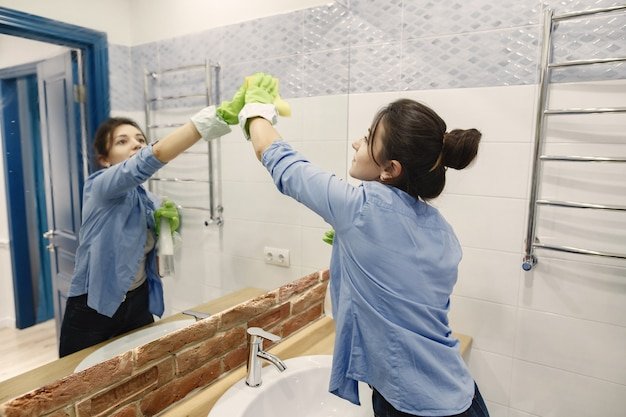
The 10-minute weekly routine works. But the real upgrade is the daily habit that keeps the bathroom looking clean between weekly cleans and means the weekly session never starts from a bad baseline.
After your morning routine (brushing teeth, washing face, whatever you do at the sink), spend 2 minutes on this:
Wipe the sink basin and counter with a damp cloth. Toothpaste and face wash rinse marks are still fresh and come off in one wipe when cleaned daily. Left for a week, they require actual scrubbing.
Wipe the mirror if there are visible splashes. 10 seconds with a dry cloth.
Flush and give the bowl a quick brush if needed. Not always necessary, but a 5-second check prevents staining from building up.
Straighten towels and any products on the counter. 20 seconds.
This takes 90 seconds to 2 minutes. It sounds almost too small to matter. But a bathroom where these 2 minutes happen every day never reaches the state that requires a 30-minute clean. The weekly 10-minute session stays genuinely quick because nothing has been allowed to build up.
This is the same principle covered in the broader guide on how to keep your house clean with no time: daily maintenance costs less total time than reactive cleaning.
Specific Bathroom Problems and How to Handle Them
Soap Scum on Shower Glass
Soap scum is a mix of soap residue, hard water minerals, and body oils. It builds slowly and is significantly easier to prevent than to remove.
Prevention: A squeegee on the shower glass after every shower removes most of the water that causes buildup. Takes 10 seconds. Eliminates most scrubbing sessions.
Removal if already there: White vinegar in a spray bottle, sprayed onto the glass and left for 10 to 15 minutes, dissolves most soap scum without heavy scrubbing. Wipe off and rinse. For severe buildup, a baking soda paste (baking soda mixed with a small amount of dish soap) applied with a cloth and left for 5 minutes works on stubborn spots.
Grout Discoloration
Grout discolors from moisture, soap, and mold. A paste of baking soda and water applied to grout lines and left for 10 minutes, then scrubbed with an old toothbrush and rinsed, removes most discoloration. For mold-related grout staining, a diluted bleach solution (check it is safe for your specific grout type first) is more effective.
Limescale on Taps
White vinegar is the most effective home solution for limescale. Soak a cloth in white vinegar, wrap it around the tap, and secure it with a rubber band. Leave it for 30 minutes to an hour. The acid dissolves the mineral deposits. Wipe off and buff dry.
Toilet Ring Stains
A pumice stone used wet on the inside of the toilet bowl removes mineral ring stains without scratching porcelain. It is more effective than most chemical cleaners for this specific problem. Wet the stone, wet the bowl, use light pressure, and rinse.
What to Keep in Your Bathroom Cleaning Kit
You do not need a different cleaner for every surface. A small, well-chosen kit handles everything:
- One bathroom disinfectant spray (covers toilet, sink, counter, and shower)
- White vinegar in a small spray bottle (limescale, soap scum, general freshening)
- Microfibre cloths x3 (one for mirror, one for sink/counter, one for floor)
- Toilet brush with a holder
- Spray mop or reusable floor cloth
- A squeegee if you have a glass shower
That is the whole kit. Keep it under the sink. When everything is in one place, the 10-minute routine stays 10 minutes.
Frequently Asked Questions
Q: How often should you really clean a bathroom?
For a bathroom used by one or two people, the 2-minute daily habit plus a 10-minute weekly clean is enough to keep it consistently clean. A bathroom used by a family of four may need a proper clean twice a week. The daily habit reduces how much the full clean needs to cover regardless of usage level.
Q: What is the fastest way to clean a toilet?
Apply cleaner to the bowl first and leave it while you clean everything else. The few minutes of dwell time means the brush does the work rather than your arm. Outside-in, top-down for the exterior: tank, lid top, seat top, seat underside, bowl exterior, base. Then the brush inside. Flush. Done in under 90 seconds once cleaner has soaked.
Q: Does white vinegar actually disinfect?
White vinegar has some antimicrobial properties but it is not a registered disinfectant. For general cleaning and removing soap scum, mineral buildup, and odors, it works very well. For surfaces where genuine disinfection matters (toilet, sick person’s bathroom), use a product that is specifically registered as a disinfectant.
Q: How do I keep the bathroom smelling clean without air freshener sprays?
Good ventilation matters more than any spray. Running the bathroom fan during and for 15 minutes after a shower prevents moisture buildup, which is the main cause of musty bathroom smells. A small open container of baking soda absorbs ambient odors passively. Regular cleaning, especially of the toilet base and the area around it, removes the source of most bathroom odors rather than just masking them.
Q: How do I clean the bathroom when I am short on time before guests arrive?
Focus in this order: toilet (guests will use it), sink and counter (visible to everyone), mirror (makes the room feel cleaner than it is when it is spotless), floor visible from the doorway. These four cover what guests notice. Skip the shower if the curtain is closed or the door is shut.
Q: What is the best cleaning cloth for bathrooms?
Microfibre cloths outperform paper towels for most bathroom surfaces. They pick up more bacteria with less product, leave fewer streaks on mirrors, and are reusable. Have at least three: one for glass/mirrors, one for the sink and counter, and one kept separate for around the toilet. Wash them in a hot wash weekly.