
Bad sleep is one of those problems that quietly makes everything else harder.
You feel it in your concentration, your patience, your energy by 2pm, your ability to handle things that would not normally bother you. Most people know they are not sleeping well. Fewer people know why, and even fewer know what to actually do about it.
This post is not about buying a weighted blanket or a specific supplement. It is about the habits and patterns that research and real experience both point to as the most effective changes for sleep quality. Most of them cost nothing and can start tonight.
Why People Struggle to Sleep (The Actual Reasons)
Before fixing sleep, it helps to understand what disrupts it.
An inconsistent body clock. Your body has an internal clock called the circadian rhythm that regulates when you feel sleepy and when you feel awake. When your sleep and wake times shift significantly day to day, that clock gets confused and neither sleep nor waking feels quite right.
A body that is not ready to sleep at bedtime. Falling asleep requires your core body temperature to drop and your brain to slow down. Activities in the hour before bed that raise alertness (screens, intense exercise, stressful work, arguments) fight against this process.
A mind that will not quiet down. Racing thoughts at bedtime are often not about anything that is happening right now. They are the brain’s attempt to process unresolved things while the day’s distractions are no longer available. This is one reason why lying in a dark quiet room is when worries feel loudest.
Caffeine staying in your system longer than you think. Caffeine has a half-life of roughly 5 to 6 hours in most people. This means that a 4pm coffee still has half its caffeine effect at 9pm or 10pm when you are trying to fall asleep.
Knowing which of these applies to you makes the habits below easier to prioritize.
The Habits That Make the Biggest Difference
Wake Up at the Same Time Every Day
This single habit does more for sleep quality than almost anything else. Including weekends.
Your body clock is set primarily by wake time, not bed time. When you wake up at the same time every morning, your circadian rhythm becomes consistent. You start to feel genuinely sleepy at roughly the same time each night and genuinely alert at roughly the same time each morning.
Sleeping in on weekends feels like a recovery strategy but it is actually the opposite. It shifts your body clock forward in a way that makes Monday morning feel like a mild version of jet lag. The Sunday night difficulty falling asleep that many people experience is usually caused by Saturday and Sunday morning lie-ins shifting the body clock.
The consistent wake time is uncomfortable for the first week. After that, it becomes the foundation that makes everything else work.
Set a Caffeine Cutoff Time
Given the 5 to 6 hour half-life, most sleep researchers suggest no caffeine after 2pm as a general rule. For people who are more sensitive to caffeine, noon is a more appropriate cutoff.
This feels extreme until you try it for a week and notice that the evening drowsiness that helps you fall asleep returns. Many people who “cannot fall asleep” find the problem is partly caffeine from a 4pm cup that they had forgotten about.
Decaf in the afternoon is a reasonable replacement. The ritual of a warm drink in the afternoon is often what people want, not the caffeine itself.
Create a Wind-Down Window of 30 to 60 Minutes
Your brain needs transition time between the activity of the day and the state required for sleep. A sudden shift from working or watching something intense to lying in the dark expecting to sleep does not work well for most people.
A wind-down window is a period of lower stimulation before bed. What goes in it matters less than the principle: whatever you do should not raise alertness. Reading a physical book works well. A short slow walk. Gentle stretching. A shower (the drop in body temperature after a warm shower actually helps sleep onset). Light conversation.
What does not work in a wind-down window: stressful news, intense television, difficult conversations, checking work email, anything that creates anxiety or urgency.
Put Screens Away 30 Minutes Before Sleep
The blue-spectrum light from phones, tablets, and laptops signals to the brain that it is daytime and delays the production of melatonin, the hormone that helps you fall asleep.
Beyond the light, the content on screens is almost always stimulating. Social media, news, videos, and messages all trigger small emotional and cognitive responses that are the opposite of what sleep needs.
Thirty minutes without a screen before bed is the minimum that makes a measurable difference. One hour is better. If this feels impossible, try turning the screen brightness all the way down and using a night mode or blue light filter as a partial measure.
Write Down What Is On Your Mind Before Bed
Lying in bed with a looping list of things you need to remember, things you are worried about, and things that need to be done tomorrow is one of the most common reasons people cannot fall asleep.
The fix is simple: before getting into bed, spend five minutes writing down everything on your mind. Tomorrow’s tasks, current worries, things you do not want to forget. Get them onto paper.
This works because the racing thoughts at bedtime are often the brain’s attempt to keep track of things. Once they are written down, the brain has permission to let go. You are not forgetting anything. It is captured. Sleep tends to come faster.
This connects well to the broader habit of reviewing your day and setting up tomorrow as part of a nightly routine.
Keep Your Bedroom Cool
Core body temperature drops as you fall asleep. A cool room supports this process. A room that is too warm makes it harder for your body to reach the temperature state that sleep needs.
The ideal sleep temperature varies by person but is generally cooler than comfortable daytime temperature. If you cannot control room temperature easily, lighter bedding, a fan, or sleeping with a window slightly open all help. Cooling before bed with a warm shower (the temperature drop afterward does the work) is another practical option.
Avoid Long Naps If Nighttime Sleep Is Your Problem
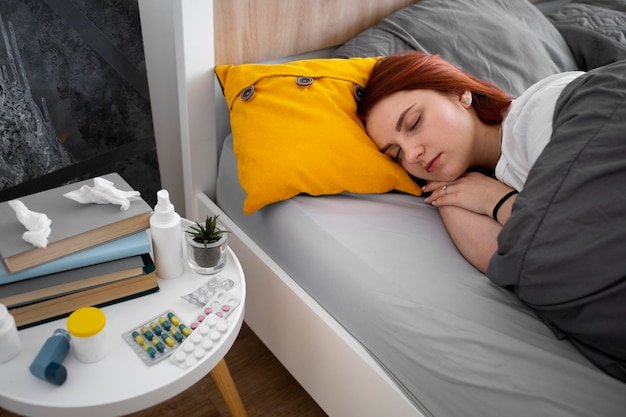
A 15 to 20 minute nap in the early afternoon can be genuinely restorative and does not disrupt nighttime sleep for most people. Longer naps, particularly those taken in the late afternoon or evening, reduce sleep pressure, which is the accumulated drive to sleep that builds throughout the day.
If you are struggling to fall asleep or sleep through the night, removing or shortening naps is one of the faster interventions. The short-term tiredness of skipping a nap increases sleep pressure by bedtime and leads to faster sleep onset and better sleep quality overnight.
The Bedroom Environment
Your bedroom sends signals to your brain. When those signals say “this is a place for sleeping,” the brain makes the transition to sleep more easily. When the bedroom is associated with work, screens, stress, and stimulation, the brain stays alert.
Use your bed only for sleep and sex. Working in bed, watching TV in bed, and scrolling in bed gradually train your brain to stay alert when you are in it. This is a real and well-documented effect. The association between your bed and wakefulness makes it harder to fall asleep.
Keep the room as dark as possible. Light signals wakefulness. Blackout curtains or a sleep mask both work. Even small light sources (charging lights, streetlights through curtains) can fragment sleep without you realizing it.
Reduce noise or create consistent sound. Complete silence works for some people. For others, a consistent background sound (white noise, a fan, rain sounds) masks the irregular sounds that cause micro-arousals during sleep. The key word is consistent. Irregular or intermittent noise is more disruptive than a constant background sound.
What to Do When You Cannot Fall Asleep
If you have been lying in bed for 20 minutes and sleep is not coming, get up.
This sounds counterintuitive but staying in bed while awake strengthens the association between your bed and wakefulness, making the problem worse over time.
Get up, go to another room, and do something low-stimulation in dim light: reading, gentle stretching, listening to quiet music. When you feel genuinely sleepy, go back to bed. This approach is the core of a technique used in sleep therapy and is one of the most effective long-term fixes for chronic difficulty falling asleep.
Do not look at the clock. Clock-watching creates performance anxiety around sleep that makes falling asleep harder. Turn the clock face away or put it out of sight.
Frequently Asked Questions
Q: How long does it take to see improvements in sleep from these habits?
The consistent wake time usually produces noticeable improvement within one to two weeks. The caffeine cutoff often shows results within a few days. The full benefit of most sleep habits takes two to four weeks to become stable because the circadian rhythm takes time to reset. Expect some initial tiredness and stay consistent through it.
Q: Why do I wake up in the middle of the night and cannot get back to sleep?
Night waking is common and often linked to: alcohol consumption in the evening (alcohol disrupts sleep architecture in the second half of the night), an inconsistent sleep schedule, stress, being too warm, noise, or light. The wind-down routine and bedroom environment changes help the most with this pattern.
Q: Does exercise help with sleep?
Yes, regular exercise is one of the more robust sleep quality improvers. Timing matters for some people: vigorous exercise close to bedtime raises adrenaline and core body temperature, which can delay sleep. Morning or afternoon exercise avoids this. Even a 20-minute walk each day helps with sleep quality.
Q: Should I take melatonin for sleep?
Melatonin is most useful for jet lag and circadian rhythm issues rather than general insomnia. It is a timing signal, not a sedative. The body produces its own melatonin in response to darkness, and the habits in this post support that natural production better than supplementation for most people with non-specific sleep difficulty. It is worth discussing with a doctor before using it regularly.
Q: What if I try all of these and still cannot sleep well?
Persistent sleep difficulty despite good sleep habits warrants a conversation with a doctor. Conditions like sleep apnea, restless leg syndrome, and anxiety disorders all disrupt sleep and are not resolved by behavioral changes alone. Cognitive Behavioral Therapy for Insomnia (CBT-I) is also a very effective treatment for chronic insomnia and is worth asking about.
Q: Is eight hours of sleep necessary for everyone?
Sleep needs vary. Most adults function best with 7 to 9 hours, but some people genuinely feel well with 6 and others need 9. The better measure than hours is how you feel: if you wake up without an alarm and feel reasonably rested, you are getting enough. If you need an alarm and feel groggy for an extended period after waking, you are likely not getting enough quality sleep.